


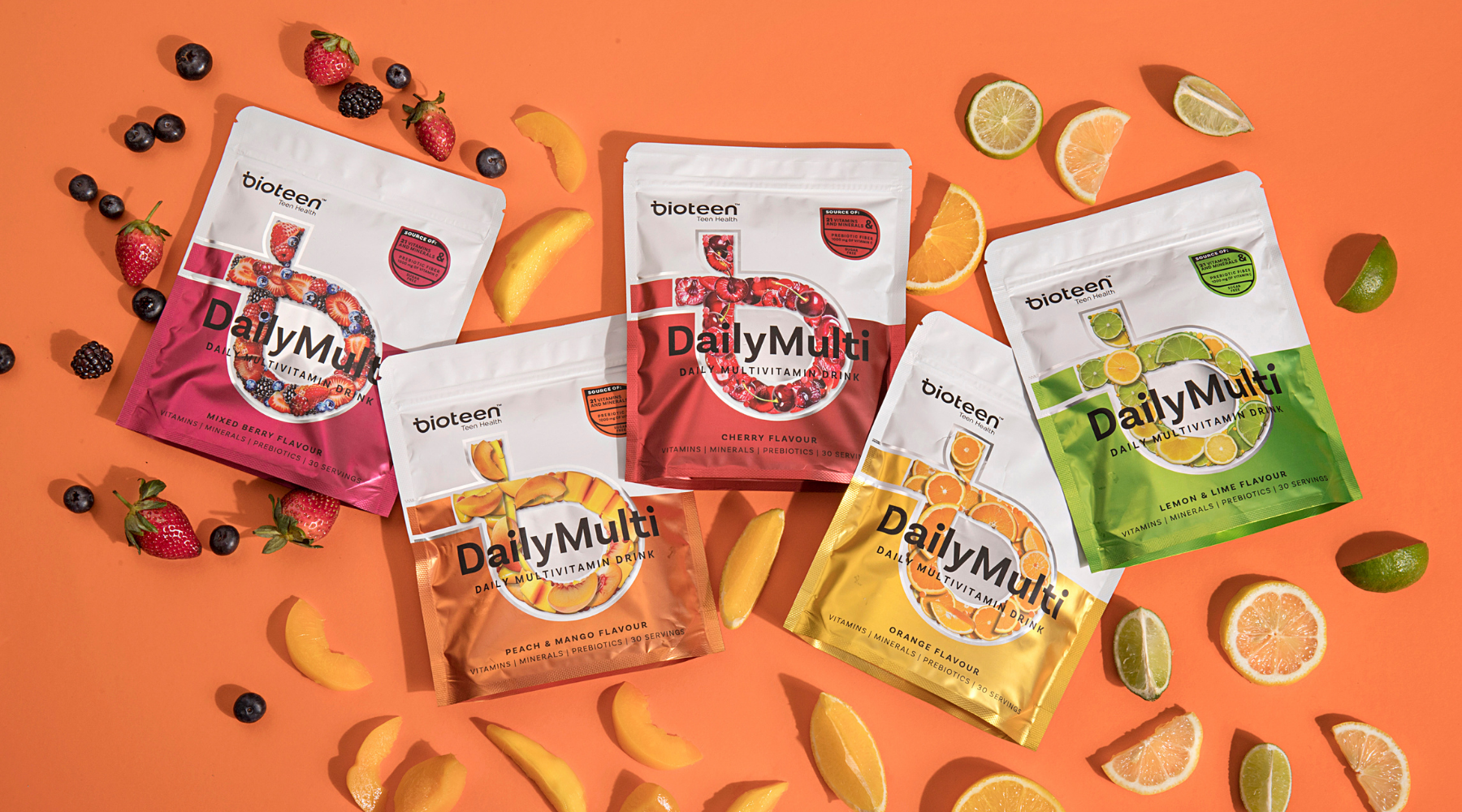
What Are Methylated Vitamins - And Why Do They Matter for Growing Adolescents?
Why Bioteen changed our formulation to active, bioavailable methylated vitamins.
If you’ve ever stood in a supplement aisle (or scrolled an ingredient list online) and wondered, “Is this actually doing anything?” - you’re not alone.
At Bioteen, we build supplements for a very specific life stage: growing bodies and developing brains (ages 9+). And one of the biggest lessons we’ve learned is this:
It’s not only about the dose on the label.
It’s about whether the body can actually use the form.
That’s the heart of why we made the decision to move toward methylated (active) B vitamins in our formulations.
The Problem: Not All Vitamin Forms Are Equally Usable
Many families do “the basics” well - balanced meals, routines, and a quality supplement - yet still notice that their children’s energy, focus, resilience, or mood can feel inconsistent.
One reason is simple:
Some vitamins must be converted into an active form before the body can use them.
And during adolescence, that matters more than you might think.
Teen bodies are often balancing:
- Rapid growth and higher nutrient demand
- Heavy school workloads (focus, memory, mental stamina)
- Sport and physical stress
- Inconsistent sleep and busy schedules
So instead of only asking:
“Do we need more vitamins?”
A more helpful question is often:
Are we using vitamin forms the body can actually use efficiently?
What Does “Methylated” Actually Mean?
“Methylated” may sound technical, but the concept is simple.
Methylated vitamins are vitamins that are already in their active (ready-to-use) form - meaning the body has less work to do before putting them to use.
A simple way to think about it:
- Standard forms are like ingredients that still need preparation
- Active forms are like ingredients ready to cook with
Two common examples parents often see:
1. Folate (Vitamin B9)
Folate is the natural form found in foods.
Many supplements use folic acid, a synthetic form commonly added to fortified foods. The body must convert folic acid into its active form before it can be used.
Some supplements instead use 5-MTHF (L-methylfolate) - the active form the body can use directly.
2. Vitamin B12
Vitamin B12 comes in several forms.
A commonly used form is cyanocobalamin, which the body converts into active forms.
Another form you may see is methylcobalamin, which is one of the biologically active forms used in the body.
Why Some People Do Better With Active Forms
Every child is different.
A very normal difference between people is how efficiently their bodies convert certain nutrients into active forms.
That conversion can be influenced by:
- Genetics (natural variation between individuals)
- High stress and busy demands (school + sport load)
- Digestive disruptions (illness, antibiotics, absorption issues)
- Overall nutrition habits
For example, the National Institutes of Health notes that folate metabolism involves enzymes that vary significantly among individuals.
For some families, choosing active forms is a practical way to support more consistent nutrient availability - by reducing the “conversion step” the body has to perform.
Why B Vitamins Matter So Much in Adolescence
B vitamins play key roles in everyday biological processes that matter to teens’ real lives, including:
- Energy metabolism (turning food into usable energy)
- Brain and nervous system function
- Red blood cell formation
- Cell growth and repair - especially important during growth phases
This doesn’t mean B vitamins are a magic fix for energy or mood.
But they are part of the basic nutritional foundation that supports adolescents as they juggle growth, school demands, sport, and busy schedules.
Why “Form” Matters as Much as “Dosage”
At Bioteen, one thing we care deeply about is usability.
A supplement can look impressive on a label - but if the form is harder for the body to convert or absorb, the “label dose” doesn’t always equal the “usable dose.”
This is one reason supplement marketing can feel confusing:
Big numbers may look good, but results can feel inconsistent.
So when we formulate, we focus on:
-
Adolescent-appropriate nutrient choices
-
Real-world consistency (what families can maintain)
-
Usable forms where it matters most
Why Bioteen Changed Our Formulation
We made this shift because we want Bioteen to be:
- Science-led, not trend-led
- Built around quality and consistency
- Designed for growing bodies
- Focused on effective nutrition - not just marketing claims
Moving toward methylated (active) B vitamin forms is part of that commitment:
helping parents feel confident that what’s on the label is designed to be meaningful and practical.
The Takeaway
If there’s one thing to remember, it’s this:
It’s not only about taking vitamins.
It’s about taking vitamins in forms the body can actually use.
That’s why Bioteen moved toward methylated (active) B vitamins - to support growing adolescents with nutrition designed for real life.
Frequently Asked Questions
What are methylated vitamins?
Methylated vitamins are vitamins in their active, ready-to-use form, meaning the body doesn’t need to convert them before use.
Are methylated vitamins better for everyone?
Not necessarily. Many people convert standard forms efficiently, but some benefit from active forms due to genetics, digestion, or higher demands.
Why did Bioteen switch to active B vitamins?
To support better usability and consistency, especially during adolescence when nutrient demands are higher.
Do B vitamins help with energy?
B vitamins support energy metabolism, helping the body turn food into usable energy - but they aren’t a stimulant or quick fix.
References
-
National Institutes of Health (NIH), Office of Dietary Supplements. Folate: Fact Sheet for Health Professionals.
-
National Institutes of Health (NIH), Office of Dietary Supplements. Vitamin B12: Fact Sheet for Health Professionals.
Disclaimer: This article is for educational purposes and is not medical advice. Always consult a qualified healthcare professional for individual guidance.




%20and%20wondered,%20%E2%80%9CIs%20this%20actually...)